
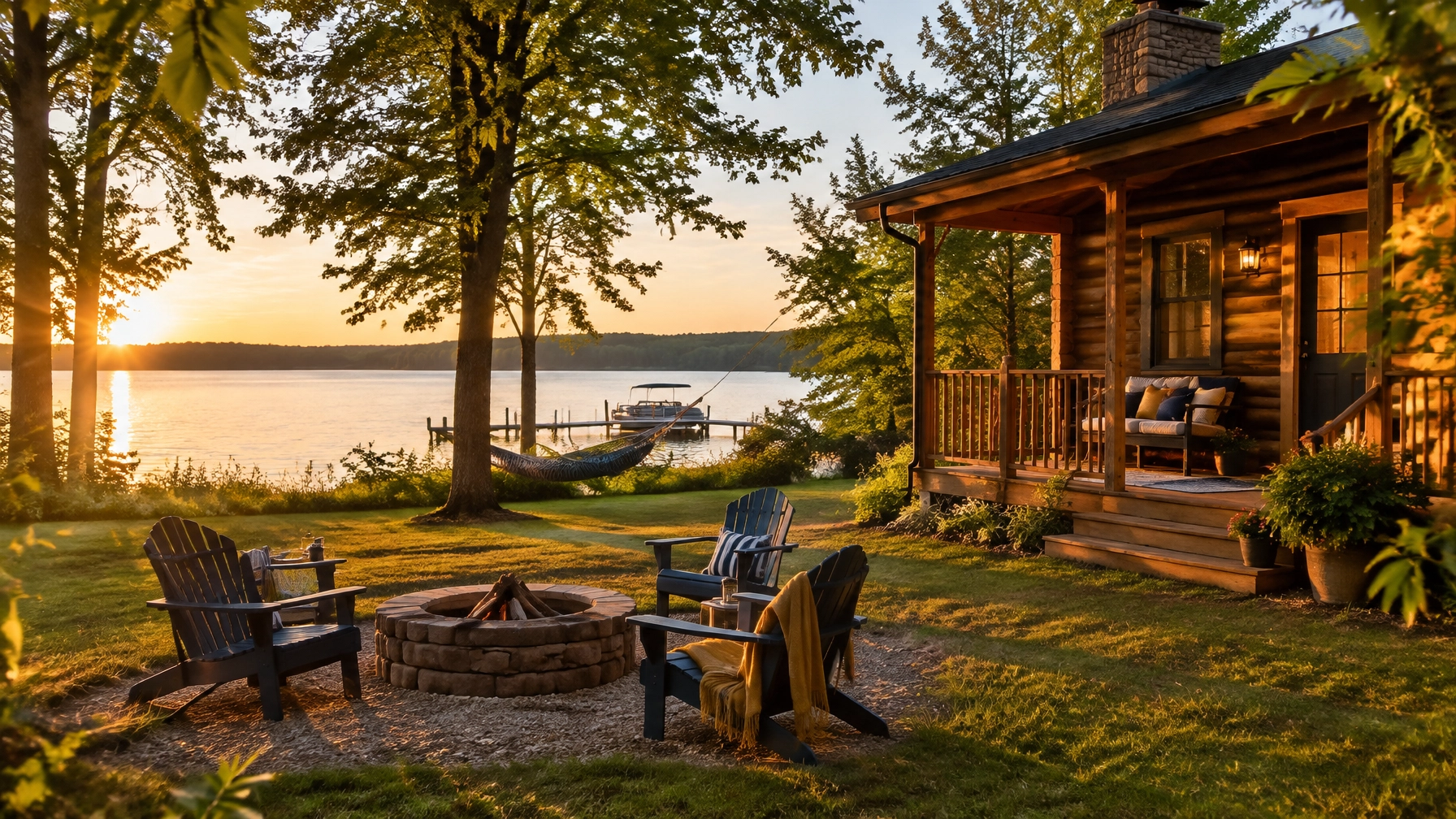
Turning a home, lake cabin, or guesthouse into a short-term rental can be a great way to welcome visitors and earn rental income. But opening your property to a rotating stream of guests changes how it’s used, and that can change how insurance responds.
Whether you host on Airbnb, Vrbo, or through direct bookings, it’s worth checking your coverage before the next guest arrives. Here are the main risks and questions Indiana hosts should consider.
A short-term rental isn’t just a home with a guest
A long-term tenant and a short-term guest use a property differently. Short stays can mean frequent check-ins, unfamiliar visitors, more wear and tear, and a business activity taking place at the property. A standard homeowners policy may limit or exclude coverage for regular short-term rentals, including some guest injuries or damage connected with renting.
That doesn’t mean every policy works the same way. The details depend on the insurer, the property, how often it’s rented, and the policy language. The National Association of Insurance Commissioners explains why home-sharing can affect homeowners coverage. The key takeaway: don’t assume your current policy covers a paid stay. Tell your insurer how you actually use the property and ask what protection applies.

What can go wrong between check-in and checkout?
A guest can slip on the steps, trip on an uneven path, or get hurt using an amenity. A guest might accidentally damage furniture, or, in some cases, cause damage deliberately. Theft, vandalism, and disputes over what happened can also become stressful and costly.
Think beyond the main house, too. A detached garage, shed, or guesthouse may need to be included in the coverage conversation. Furnishings, appliances, linens, electronics, and other items you provide for guests may be treated differently from your personal belongings.
And if the property has a pool, hot tub, fire pit, or other feature that requires extra care, ask how its use affects liability coverage. Safe maintenance, clear guest instructions, and appropriate barriers are important risk-management steps, but they don’t replace insurance.
What kind of insurance should hosts ask about?
Depending on the property and its use, a carrier may offer a short-term rental or vacation-rental policy, an endorsement, or another suitable arrangement. A landlord-style policy may be an option in some circumstances, but not every landlord policy is designed for frequent, short guest stays. Ask specifically whether the proposed coverage allows the type and frequency of rental you plan to offer.
A policy designed for short-term rental use may address areas such as:
- The building and other structures: The home and eligible detached structures, subject to policy terms, conditions, and exclusions.
- Liability: Certain claims involving guest injuries or damage to someone else’s property, subject to policy terms, conditions, and exclusions.
- Furnishings and contents: Items you keep at the rental, subject to policy terms, conditions, and exclusions.
- Rental income: Lost income after a covered event makes the property unlivable, if the policy includes applicable coverage and the loss meets its requirements.
Don’t assume that damage to your property or canceled bookings are automatically covered just because the building is insured. Ask what causes of loss qualify, what documentation is needed, and how long any income-related coverage may apply. Coverage varies by carrier, location, and underwriting; all coverage is subject to policy terms, conditions, and exclusions.

Platform protection can help, but it isn’t your insurance policy
Airbnb and Vrbo offer host protection programs, but they are not substitutes for insurance you arrange for your property. Their programs have their own definitions, exclusions, conditions, and claim processes. Whether a program applies can depend on the incident, the reservation, and how the booking was handled.
For example, Airbnb describes Host liability insurance and separate Host damage protection. Airbnb says its Host damage protection is not an insurance policy and doesn’t replace insurance obtained by the host. Review Airbnb’s current Host damage protection terms and Host liability insurance information rather than relying on a summary, or assuming the program covers every possible loss.
Vrbo also describes a liability program with specific requirements and terms. Its liability insurance information is worth reviewing, but liability protection should not be mistaken for comprehensive coverage for your building, belongings, or rental income.
Use platform programs as a possible extra layer, not as your only plan. Ask your agent how the platform’s protection interacts with your own policy and what gaps may remain.
Indiana hosting has its own local details
Indiana hosts may welcome visitors to lake cabins, provide lodging during hunting season, or rent a home during a local festival or sporting event. Those uses can bring different booking patterns and different questions about occupancy, property features, and local requirements.
Check with the city, town, or county where the property is located about zoning, permits, safety rules, taxes, and any applicable homeowners association or condominium restrictions. Local requirements can differ from one community to another. For instance, Whitestown’s Code Compliance page provides local guidance on short-term rentals. It’s an example, not a rulebook for every Indiana community, so contact the relevant local offices for your property.
Water deserves attention, too. Storm damage, water entering from outside, and sewer or drain backup may be treated differently under insurance policies. Don’t assume that a policy covering some kinds of water damage also covers flooding. The Indiana Department of Insurance’s flood insurance resource is a useful starting point for understanding flood coverage. Ask an agent what applies to your specific property and whether building, contents, and rental-income concerns need separate consideration.
A practical checklist before the next booking
A short review now can help you understand what to expect before a claim happens:
- Tell your insurer before you list. Explain how often you’ll rent, which platforms or booking methods you’ll use, and whether guests can use features such as a pool, hot tub, or fire pit.
- Ask about the whole property. Discuss the main home, detached structures, furnishings, appliances, liability, and rental income.
- Keep good records. Save receipts for furniture, equipment, improvements, and repairs. Take dated photos and keep an inventory of items supplied for guests.
- Check local rules. Confirm applicable requirements with local authorities and review any HOA or condominium rules.
- Review before busy seasons. A lake cabin before summer, a hunting-season rental, and a home listed for local events may have different booking patterns. Check that your insurer knows about changes in use.
- Ask about umbrella liability. An umbrella policy may be worth discussing, but confirm that it can apply to your rental activity and understand its limits and exclusions.

Get a review that fits how you host
There isn’t one short-term rental policy that fits every Indiana property. A lake house with a dock, a furnished home rented during local events, and a small guesthouse may call for different conversations about use, property features, and liability.
Jett Insurance Agency is an independent agency that can compare options from multiple insurance providers and help you explore coverage suited to how you actually use the property. We’ve served clients since 1990, and our approach is personal: one size doesn’t fit all.
For a free review of your short-term rental property’s coverage before the next booking season, call 765-987-7019 or visit www.jettins.com. We’ll help you identify questions to ask and options to consider. Coverage varies by carrier, location, and underwriting and is subject to policy terms, conditions, and exclusions.