
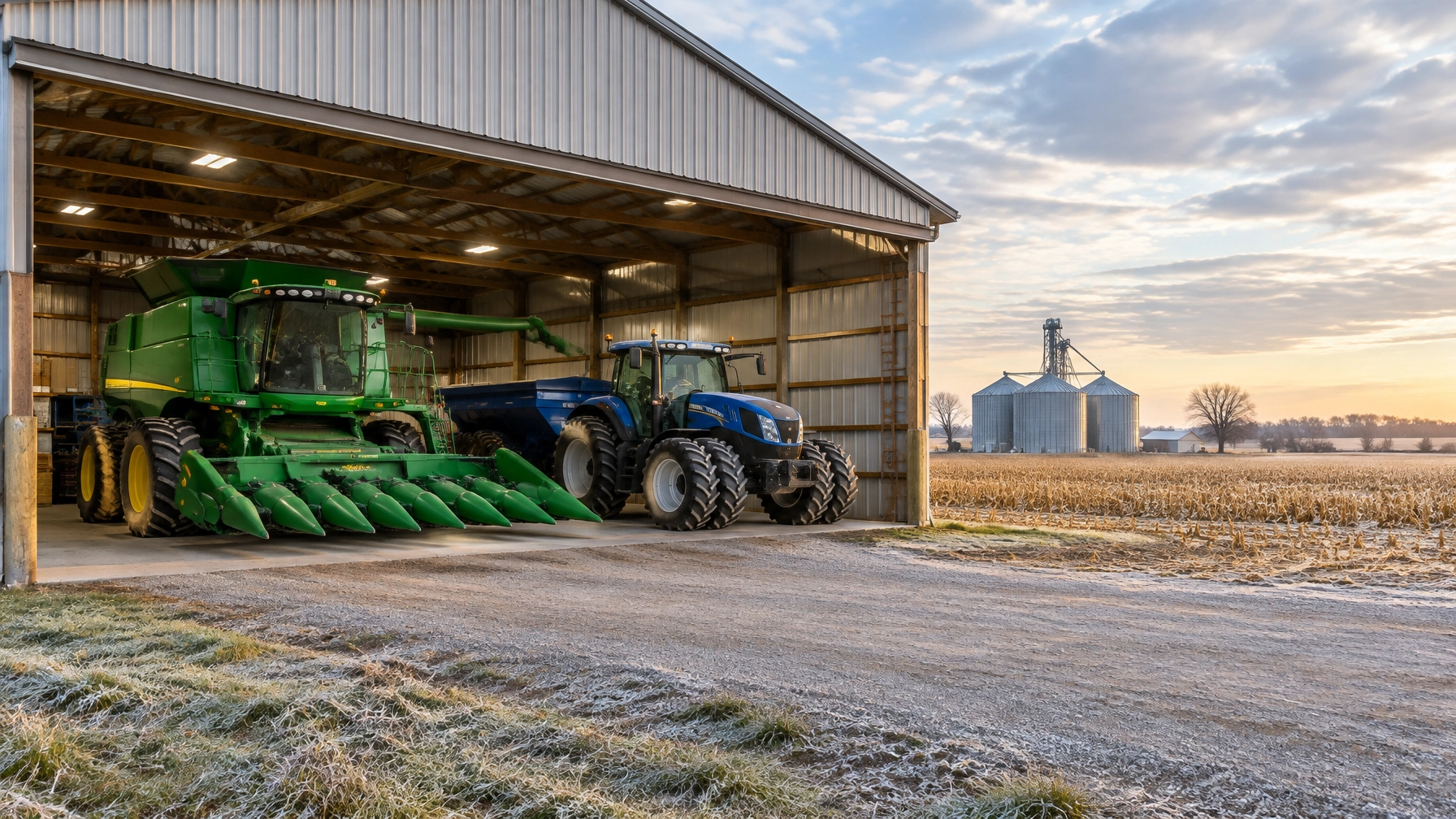
When the combines are finally parked and the last loads are in, the farm gets a chance to catch its breath. The long days in the field may be winding down, but the work isn’t over. Early November is a useful transition window: a chance to put equipment away properly, finish up seasonal chores, and get buildings and livestock systems ready for Indiana winter.
Every farm has its own rhythm and priorities. You know your land, equipment, and operation better than anyone. Here are some practical places to turn your attention as harvest wraps up, and a few reasons those end-of-season tasks matter.
Put the iron away with care
Before a combine, tractor, or implement settles in for the winter, give it a good clean. Crop residue, mud, and moisture can take a toll while machinery sits. Follow the manufacturer’s guidance for cleaning, service, fluids, batteries, and storage; make a note of repairs that can be handled before the next busy season.
Choose a dry, secure storage spot when possible, and leave room to move around equipment safely. If machinery has to sit outdoors, consider what is exposed to weather and whether it can be positioned to reduce avoidable wear. A few minutes spent organizing the shed now can also make it easier to get to the machine or tool you need later.

Think, too, about what else shares the building. Hay, fuel, chemicals, and machinery all have different storage needs. Keeping areas orderly, following product labels, and maintaining clear access around equipment can help reduce hazards and make routine checks easier.
Finish the grain move, and tidy the storage areas
After harvest, grain may still be moving from the field to bins, a dryer, or market. Take care around augers, conveyors, trucks, and other equipment, and keep walkways and work areas as clear as the job allows. Grain bins and dryers deserve particular attention: follow operating and safety guidance, and don’t enter a bin unless you’re trained and equipped to do so.
Once the busy work settles, clean out equipment sheds and work areas. Remove accumulated chaff and dust where it is safe to do so, and put tools, cords, and supplies where they belong. A cleaner space is easier to inspect, and easier to work in when winter repairs can’t wait.
Fuel and chemicals need careful handling, too. Store them in appropriate, clearly identified containers and locations, follow label instructions, and keep them away from heat sources and ignition hazards. If you’re unsure how a particular product should be stored for winter, check its label or ask the supplier.
Walk the farm while the equipment is down
Equipment downtime creates a good opportunity to walk the property. Check fences, gates, and access points. Look over barn and shed roofs from a safe vantage point, clear gutters where practical, and note tree limbs hanging over buildings, driveways, or power lines.
That walk can help you spot small issues before snow, ice, or frozen ground makes them harder to address. A loose gate, blocked drainage path, or damaged roof section may be easier to deal with now than in the middle of a winter storm.

For roofs and other structures, don’t take chances to get a closer look. If a building appears damaged, sagging, or otherwise unsafe, keep people and animals clear and seek qualified help. Heavy snow and ice can add stress to barns and sheds, and uneven drifting can create trouble where it piles up.
Get water and livestock systems ready
A frozen pipe in an outbuilding or grain-dryer shed can be more than an inconvenience. Identify vulnerable lines, shutoffs, and drain points. Insulate exposed pipes where appropriate, disconnect outdoor hoses, and follow manufacturer instructions for heat tape or other protective equipment. The Indiana Office of Utility Consumer Counselor’s frozen-pipe guidance offers useful general advice, including a clear warning: never try to thaw a frozen pipe with an open flame.
Livestock water systems need attention before a hard freeze, not after the water stops flowing. Test heated waterers and check the parts you rely on. Have a practical backup plan for keeping water available during a power interruption. Purdue Extension notes that livestock need access to thawed water in winter and that snow alone generally won’t meet their water needs. Read more in Purdue Extension’s guidance on protecting livestock during winter storms.

Take fire and cold-weather risks seriously
Space heaters and heat lamps can be useful in the right setting, but they also bring fire risk. Use equipment according to its instructions, keep combustible materials well away, and avoid damaged cords or makeshift electrical setups. Check that the barn’s electrical and heating equipment is in suitable working order, and make sure people on the farm know what to do if a fire starts.
Cold weather can also affect machinery. Batteries, tires, fluids, and exposed components may need seasonal attention based on the equipment maker’s recommendations. Rodents can damage wiring and hoses, so keep storage areas tidy and check on parked machinery during the winter rather than assuming it will be fine until spring.
And remember the roads. Rural routes can become slick quickly during freezing rain or an ice storm. Give yourself extra time, use caution with farm vehicles and loaded trailers, and consider whether a trip can wait until conditions improve.
Use the quieter stretch to get organized
Harvest’s end can bring a welcome pause, even if there are still chores on the list. It can also be a convenient time to organize farm records and note changes from the season while they’re fresh. Many farm insurance policies renew near year-end. Knowing your renewal date now is better than discovering in February that you need to ask questions in a hurry.
That doesn’t mean every operation needs the same insurance setup. Farms differ in buildings, equipment, crops, livestock, and day-to-day work. Coverage options also vary by carrier, location, and underwriting, and are subject to policy terms, conditions, and exclusions.
At Jett Insurance, we’re an independent agency that works with multiple carriers and can compare farm insurance options side by side. Our approach is personal because one size doesn’t fit every farm. We’ve served Indiana farm families since 1990, and we understand that a farm is both a livelihood and a home. You can learn more about our perspective in our article for Indiana farm operations.
The combines may be parked, but a little thoughtful attention now can make the transition into winter smoother. Take the walk, finish the seasonal chores that matter most to your operation, and make time for the paperwork while harvest is behind you.
When it’s convenient, call Jett Insurance at (765) 987-7019 or visit www.jettins.com to talk with us about a farm policy review. We’re based in Lewisville, Indiana, and happy to help you understand your options.