
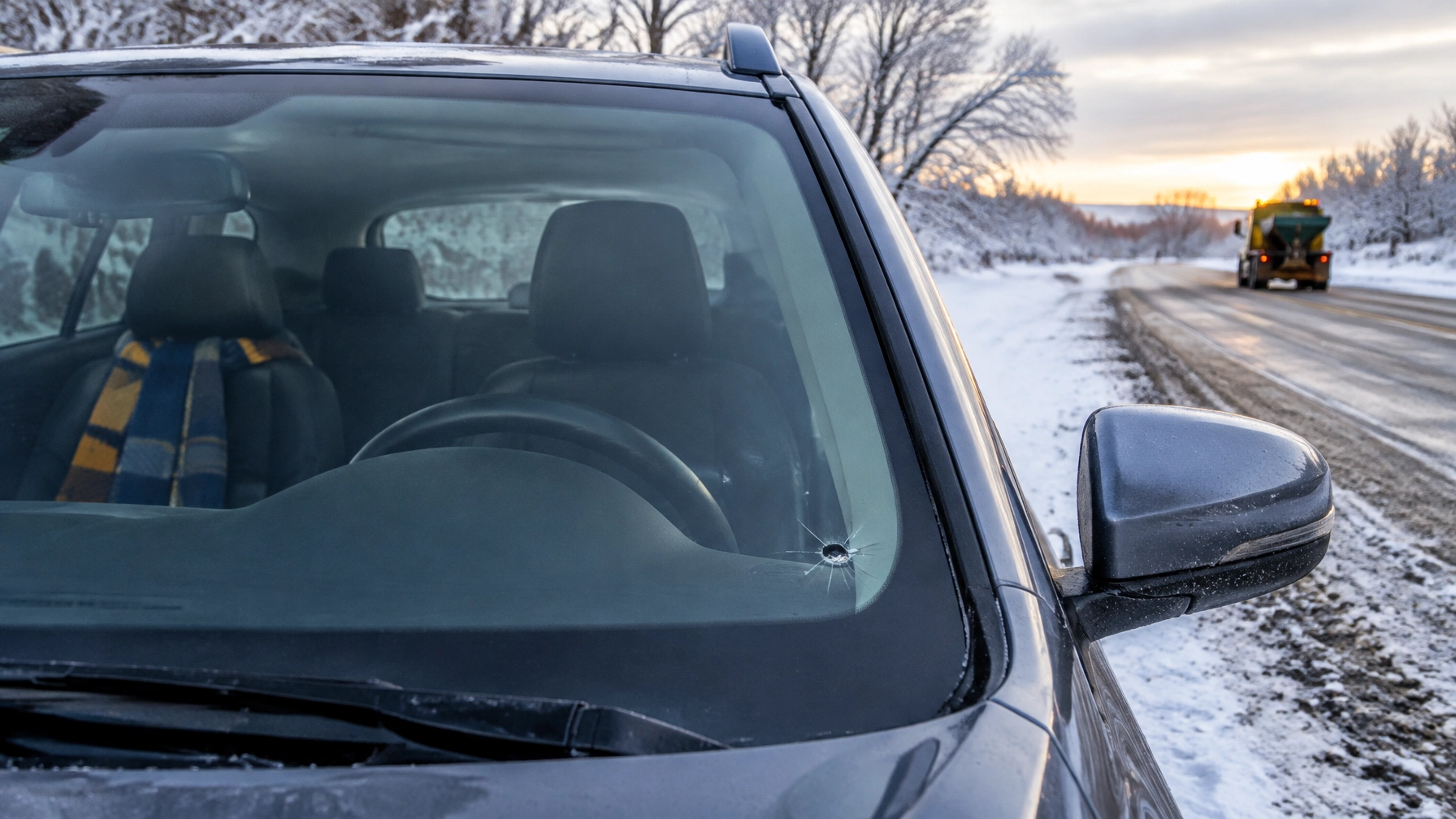
A tiny chip in your windshield can be easy to overlook, until a cold morning, a blasting defroster, or another bump in the road turns it into a crack stretching across your view. Indiana winters bring plenty of conditions that can damage auto glass, and once glass is damaged, the repair can become more involved.
Before temperatures plunge, it’s worth checking how your auto policy handles windshield and other glass damage. Here’s what Indiana drivers should know about winter glass damage, comprehensive coverage, and options that may help with a deductible.
Why winter is tough on auto glass
Winter roads can send gravel and debris flying. Snow plows and salt trucks help make roads safer, but the loose material they leave behind can be kicked up by passing vehicles. Rocks and other debris can also strike your windshield as you travel on treated or uneven winter roads.
Cold weather adds another challenge. A small chip can spread when temperatures swing or when cold glass is heated quickly. Frozen ice, falling branches, and the everyday bumps of winter driving can add to the risk.

How a small chip can become a big problem
Glass expands and contracts as its temperature changes. If a windshield is cold and you suddenly direct warm air from the defroster onto one area, the difference in temperature can put stress on the glass. A chip is already a weak point, so that extra stress may cause it to spread into a crack.
The same principle is why you should never pour hot water on a frozen windshield. The sudden temperature change can damage the glass, and water may freeze again as it runs across the windshield. Use your defroster gradually and clear softened ice with a plastic scraper or another appropriate tool. AAA offers additional windshield de-icing guidance.
What auto glass coverage usually means
Windshield and other glass damage is typically handled under comprehensive coverage on an auto policy. Comprehensive generally applies to certain kinds of damage other than a collision. Glass breakage is one example. If the glass breaks as part of a crash, collision coverage may be relevant instead.
A deductible may apply when you make a comprehensive claim. Some insurance carriers also offer a full-glass option or another arrangement that waives or reduces the deductible for eligible glass damage. These options aren’t available on every policy, and details vary by carrier and policy.
That’s why it’s helpful to check your declarations page or ask your agent:
- Do I have comprehensive coverage?
- What deductible applies to glass damage?
- Does my policy offer full-glass coverage or a separate glass deductible?
- Are repairs and replacements treated differently under my policy?
Coverage is subject to policy terms, conditions, and exclusions, and availability varies by carrier, location, and underwriting. The Indiana Department of Insurance auto insurance guide explains that comprehensive coverage can include glass breakage and that a deductible may apply.
Repair or replacement? It depends on the damage
A small chip may be repairable, especially if it’s addressed promptly. A qualified glass technician can assess its size, location, and condition. Repairing a chip may take less time and cost less than replacing a windshield, but the right option depends on the damage and the technician’s assessment.
A crack that’s spreading, damage near the edge of the glass, or damage that interferes with the driver’s view may require a full replacement. If your vehicle has cameras or sensors around the windshield, ask the installer whether they need to be recalibrated after replacement.

Don’t wait for a chip to grow before having it looked at. Dirt, temperature changes, and normal driving can make damage more difficult to address. If a crack affects your visibility, get professional guidance before driving.
What to do if you notice windshield damage
A few simple steps can help you make a clear decision and avoid surprises:
- Take photos. Document the damage and where it appears on the glass.
- Check your policy. Find out whether comprehensive coverage applies and ask how your deductible works for glass.
- Contact your insurer or agent promptly. Ask about your options and any claim steps before authorizing work.
- Get the damage assessed. A qualified glass professional can tell you whether repair is appropriate or replacement is needed.
- Act before the chip spreads. Addressing damage early may leave you with more repair options.

Don’t assume glass is automatically covered, or that a claim never makes sense
Two common assumptions can trip drivers up: “My insurance automatically covers every glass repair,” and “It’s never worth contacting my insurer for a chip.” Neither is true for every policy or situation.
Whether coverage applies, what deductible you’ll pay, and whether it makes sense to file a claim depend on your policy and the damage. A quick review can help you understand what you have before winter weather puts it to the test.
Get your glass coverage checked before the first hard freeze
At Jett Insurance Agency, we know one auto policy doesn’t fit every driver. As an independent agency, we can review your current coverage and compare options from multiple insurance carriers to help you find a comprehensive and glass setup that fits your needs. We’ve been serving clients since 1990, with a personalized approach to insurance.
Before the first hard freeze, call Jett Insurance at (765) 987-7019 or visit jettins.com for a free auto policy review, including a check of your glass and comprehensive coverage. We’re located in Lewisville, Indiana, and we’re happy to help you understand what your policy says before a small chip becomes a winter headache.
Coverage varies by carrier, location, and underwriting and is subject to policy terms, conditions, and exclusions. A review can help explain your current policy but does not guarantee coverage or a claim outcome.