
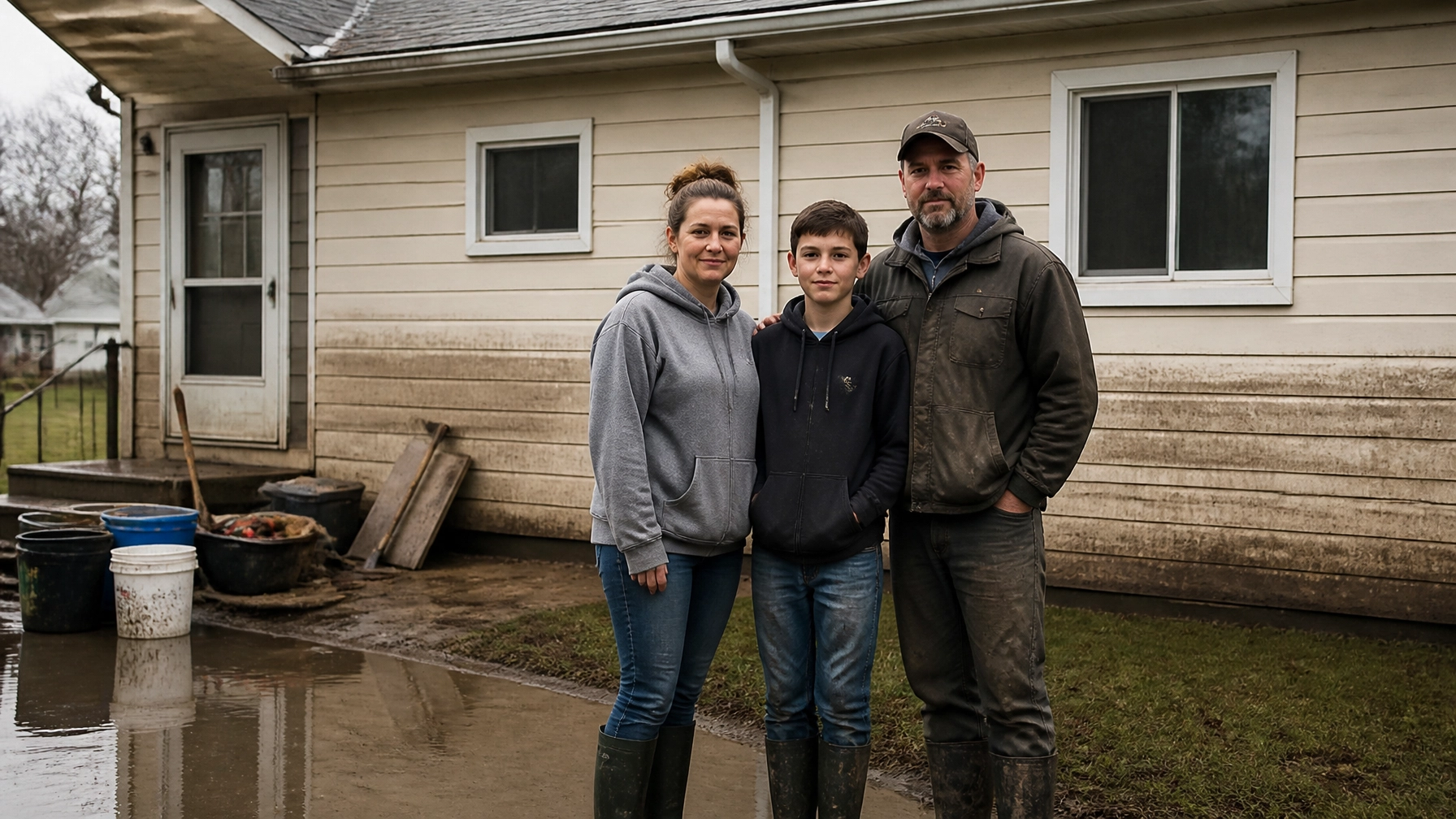
A serious flood can leave families feeling overwhelmed, displaced, and unsure where to begin. Between property damage, temporary housing, cleanup, insurance claims, and applications for disaster assistance, there may be many forms to complete and agencies to contact.
If you or someone you love has been affected by the recent flooding, please know that you are not alone. The recovery process takes time, but taking the right steps early can help protect your family, preserve important information, and connect you with available assistance.
Here is a practical guide to what to do after a flood.
1. Put safety first
Before documenting damage or entering your home, make sure it is safe to do so.
- Call 911 for immediate danger, medical emergencies, trapped individuals, or active flooding threats.
- Do not enter a building if there is structural damage, standing water near electrical systems, gas odors, or other hazards.
- Keep children and pets away from contaminated water, damaged structures, and debris.
- Contact your local officials before returning home if an evacuation order remains in effect.
- If you need a place to stay, check with the American Red Cross, Salvation Army Indiana, or local emergency management officials.
The Indiana Department of Homeland Security also recommends texting SHELTER followed by your ZIP code to 4FEMA (43362) to search for available emergency shelters. Spanish-speaking residents can text REFUGIO followed by their ZIP code.
2. Document everything before cleaning up
Once it is safe, document the condition of your home, property, and vehicles before throwing anything away or beginning major repairs.
Use your phone to take detailed photos and videos of:
- Exterior damage, including the foundation, siding, roof, doors, windows, and landscaping
- The waterline inside your home
- Damaged flooring, drywall, cabinets, appliances, and furniture
- Electrical, heating, plumbing, and HVAC equipment
- Personal belongings, including clothing, electronics, tools, and children’s items
- Damage to garages, sheds, fences, driveways, and other structures
- Flood-damaged vehicles
Take wide shots to show the full room or property, followed by close-ups of individual items. If possible, include something that shows scale, such as a ruler or measuring tape.
Create a written inventory. Include the item, approximate purchase date, original cost if known, current condition, and estimated replacement cost. Save receipts for emergency lodging, food, cleanup supplies, temporary repairs, and other necessary expenses.
Do not discard damaged items until your insurance company or adjuster tells you it is appropriate. If something must be removed for health or safety reasons, photograph it thoroughly first and keep samples, labels, receipts, or other evidence whenever possible.

3. Contact your insurance agent immediately
Your next call should be to your insurance agent or insurance company. Do not wait until all the damage has been assessed or all your paperwork is complete.
Your agent can help you:
- Identify which policies may apply
- Start the claims process
- Explain deductibles and important deadlines
- Provide the insurance company’s claim number and contact information
- Help you understand what documentation is needed
- Discuss temporary repairs and additional living expenses
- Coordinate questions involving your home, auto, or business coverage
At Jett Insurance, we understand that no two households have the same needs. Our role is not simply to point you to a phone number. We will help you understand the process, communicate with the carrier, and advocate for you as your claim moves forward.
You can learn more about available home coverage through our homeowners insurance information page.
4. Know the difference between homeowners insurance and flood insurance
One of the most confusing parts of flood recovery is understanding which policy covers the damage.
A standard homeowners policy generally covers many unexpected causes of loss, such as fire, theft, wind, or certain types of sudden water damage. However, damage caused by flooding is usually excluded from standard homeowners insurance.
Flood insurance is typically purchased as a separate policy. It may provide coverage for certain types of physical damage to the building and, depending on the policy, personal belongings. Coverage is subject to the policy’s terms, limits, exclusions, waiting periods, and deductible.
The definition of “flood” can also matter. Rising water from heavy rain, overflowing rivers or creeks, and surface water may be treated differently from a burst pipe or a backed-up drain. That is why it is important to have an agent or claims representative review the specific facts and policy language rather than assuming a loss is covered: or not covered.
Your auto policy may help with flood damage to a vehicle if you carry comprehensive coverage. Contact your agent before assuming your vehicle is uninsured.
5. File and organize your claim
When you file a claim, keep a dedicated recovery folder: physical or digital: for everything related to the loss.
Record:
- The date and time you reported the claim
- The claim number
- Names and contact information for everyone you speak with
- Inspection and adjuster appointments
- Documents submitted
- Estimates and receipts
- Temporary housing and repair expenses
- Questions that still need answers
Ask your insurer what emergency repairs are permitted before an inspection. You may need to take reasonable steps to prevent further damage, such as covering broken windows, removing standing water, or arranging emergency drying. Keep receipts and photograph the work before, during, and after it is completed.
Avoid making permanent repairs, signing contracts, or accepting a settlement before you understand what is being offered. You can ask questions and request an explanation of how the settlement was calculated.
Common flood recovery mistakes to avoid
Waiting to report the damage
Even if you are uncertain whether your policy covers the loss, report it promptly. Your agent can help determine the next step.
Cleaning up without taking photographs
Once damaged materials are removed, it can be harder to prove the extent of the loss. Document first whenever safety allows.
Hiring the first contractor who arrives
Unfortunately, disasters can attract dishonest contractors and repair scams. Get written estimates, verify licensing and insurance, and avoid paying the full amount upfront. The Indiana Attorney General’s consumer protection resources can provide additional guidance.
Assuming FEMA replaces insurance
FEMA assistance is not a substitute for insurance. If a federal disaster declaration includes your area, FEMA may provide assistance for eligible uninsured or underinsured losses. FEMA generally requires applicants to provide insurance information and may expect them to file an insurance claim first.
Paying disaster assistance fees
Be cautious of anyone asking you to pay for access to FEMA assistance or promising guaranteed approval. Use official government websites ending in .gov, such as DisasterAssistance.gov and FEMA.gov.
Local and national resources for Indiana families
Indiana 211
Call 211 or 866-211-9966 to connect with local help for:
- Emergency and longer-term housing
- Food and water
- Utility assistance
- Cleanup support
- Counseling
- Transportation
- Financial assistance
- Disaster damage reporting and referrals
You can also search for available services through Indiana 211. Resource availability may vary by county, so tell the navigator where you live and explain your most urgent needs.
FEMA disaster assistance
Visit DisasterAssistance.gov to check whether federal assistance is available in your area and apply if eligible. You can also visit FEMA’s Indiana disaster resources page for declared disasters, recovery centers, flood maps, and state-specific information.
FEMA’s Indiana referral list includes resources involving housing, agriculture, disability services, crisis counseling, unemployment, and more.
Indiana Department of Homeland Security
The Indiana Department of Homeland Security disaster resources page includes information about Indiana 211, shelters, FEMA, the State Disaster Relief Fund, county emergency management agencies, food assistance, housing resources, and other recovery programs.
The State Disaster Relief Fund may become available after certain officially declared disasters when insurance and federal assistance do not fully address eligible losses. Programs, deadlines, and qualifying counties can change, so check the latest state information.
Local emergency management agencies
Every Indiana county has an emergency management agency. Your county EMA can provide information about evacuation orders, damage reporting, debris removal, assistance centers, inspections, and local recovery programs.
Use Indiana’s county EMA lookup to find the appropriate office.
American Red Cross and Salvation Army
The American Red Cross Indiana Region can help connect survivors with emergency shelter, food, health services, mental health support, and recovery resources. The Indiana regional disaster assistance number is 888-684-1441. Some border counties are served by neighboring Red Cross regions, so confirm the appropriate number for your county.
The Salvation Army Indiana Division provides immediate and longer-term disaster support, which may include food, clothing, cleanup assistance, shelter referrals, and emotional or spiritual care.
You do not have to navigate this alone
Flood recovery involves more than repairing a building. It means helping your family find a safe place to sleep, replacing essential belongings, managing unexpected expenses, and making difficult decisions while you are already under stress.
Start with safety. Document the damage. Contact your insurance agent. Then use Indiana 211, FEMA, IDHS, the Red Cross, Salvation Army, and your county emergency management agency to find additional support.
If your home, vehicle, or business has been affected, contact Jett Insurance for help reviewing your coverage and beginning the claims process. We are here to answer questions, explain your options, and advocate for you as you take the next steps toward recovery.
This article is for general informational purposes and does not change, expand, or replace the terms of an insurance policy or an official disaster assistance program. Resource availability and application deadlines may change. Always confirm current information with the applicable agency or your insurance professional.